What is an AI receptionist? How one answers your phone, and what it can't do
What an AI receptionist is, how it answers and books calls, what it can't do, and the Australian rules on recording calls and telling callers.
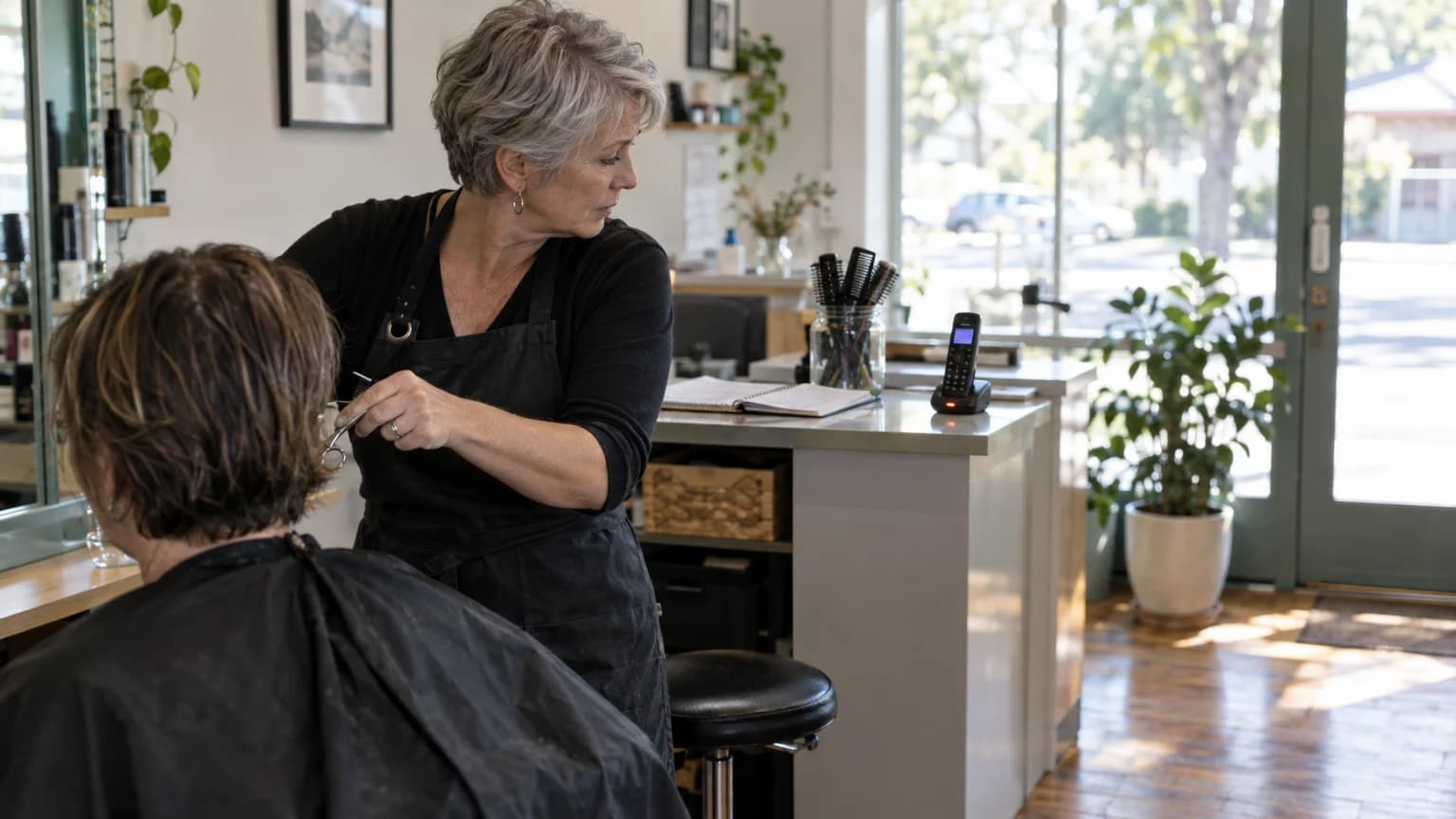
The phone rings while you're halfway through a haircut, under a sink, or serving someone at the counter. You can't get it. Half the time they don't leave a message. They just ring the next business on Google.
An AI receptionist is what everyone's suddenly talking about for that problem. The ads promise it'll answer every call, book every job and sound exactly like a person. Some of that is true.
I build AI agents every day, and I'm building an AI receptionist for Aussie small businesses right now. So here's the plain-English version: what one is, how it actually works, what it can't do, and the Australian rules that come with it. If you're a tradie, AI receptionist for tradies covers your side of it.
What is an AI receptionist?
An AI receptionist is software that answers your business phone with a natural-sounding voice when you can't. It talks to the caller like a person would, works out what they need, answers from your own information, takes their details or books the job, and sends you a summary.
It's the phone version of a website chatbot. If you know what a chatbot is, it's the same idea, except the customer talks instead of typing, and the receptionist talks back.
You'll see it called a few names: AI receptionist, AI phone agent, AI voice agent, AI answering service. They mostly mean the same thing. "Virtual receptionist" is the one to watch, because it often means a real person in a call centre.
In Australia you'll come across AI receptionists like Sophiie, Johnni and Aissie, and phone systems like RingCentral and Zoom now have one built in. They differ on how they sound, what they connect to and how they charge.
How does an AI receptionist work?
An AI receptionist works in five steps: the call reaches it, it listens, it works out the answer, it talks back, and it sends you the result.
- The call reaches it. You keep your number. Calls you don't pick up, after a few rings or while you're already on the phone, forward to the AI receptionist. Some businesses send every call to it after hours. Here's how to forward calls on every Aussie network.
- It listens. Speech recognition turns what the caller says into text as they say it.
- It works out the answer. A language model, the same kind of AI behind ChatGPT, reads what the caller said and decides what to do: answer a question from your prices, hours and service areas, take a message, book a time, or put the call through to you.
- It talks back. A computer voice speaks the reply. The good ones answer in about the time a person takes to think.
- You get the result. The booking lands in your calendar and a summary lands on your phone, usually as a text.
Like a website chatbot, an AI receptionist only knows what it's been given. It knows how a phone call usually goes. It doesn't know your call-out fee, which suburbs you cover, or that you don't do gas fitting, unless someone tells it and keeps it up to date.
What can an AI receptionist do?
An AI receptionist can do most of what a good front-desk person does on the phone, at any hour, and on several calls at once:
- Answer every call in a couple of rings, including two at once and the ones at 9pm.
- Answer the common questions from your information: prices, hours, areas, what you do and don't do.
- Take a proper message: name, number, address, what they need and when suits.
- Book the job or appointment into the calendar you already use.
- Sort urgent from routine, and put the urgent calls straight through to you.
- Text you a summary the moment the call ends.
- Screen out the junk: telemarketers and robocalls.
What can't an AI receptionist do?
An AI receptionist can't use judgement it hasn't been given, and it isn't as good as you with an upset caller or a job that needs a real conversation.
- It doesn't know what you haven't told it. Ask about a price or a service that isn't in its information, and a good one says you'll confirm. A bad one guesses.
- It's not great with an angry caller. It can stay polite and take the details. It can't calm someone down the way you can.
- It can't quote a tricky job. "How much to redo the bathroom?" needs you, or at least a site visit.
- It struggles with a terrible line. Wind, a jackhammer in the background or a caller on speaker in the car makes any receptionist ask them to repeat, human or AI.
From the building side, the hard parts of an AI receptionist aren't the clever bits. They're the basics a person does without thinking: getting a street name and a phone number exactly right, knowing when the caller has finished talking, and not talking over them. A good AI receptionist reads the address and number back before it hangs up. Ring any one you're considering and test it on exactly those.

What is the difference between an AI receptionist and a virtual receptionist?
A virtual receptionist is usually a real person in a call centre who answers for lots of businesses. An AI receptionist is software. Each one is better at different things.
| AI receptionist | Virtual receptionist (a person) | Voicemail | |
|---|---|---|---|
| Who answers | Software, in a natural voice | A person in a call centre | Nobody |
| Hours | Any hour | Depends on the plan | Any hour |
| Two calls at once | Yes | Usually | Takes both, answers neither |
| Books into your calendar | Yes, if it's connected | Sometimes | No |
| Knows your prices and services | What you give it | What's on their script | No |
| An upset caller | Polite, takes the details | Better | Worse |
| Usually billed | Monthly, with set minutes or calls, then extra | Per call, or a monthly bundle | Free |
Plenty of businesses end up with both: an AI receptionist for after hours and overflow, and a person, or themselves, during the day.
Will callers know they're talking to an AI receptionist?
Callers should know they're talking to an AI receptionist, because a good one tells them in its greeting. Australia's privacy regulator, the Office of the Australian Information Commissioner, says in its guidance on AI products that public-facing AI tools should be clearly identified as AI.
The voices are good enough now that plenty of callers wouldn't guess, which is exactly why saying so matters. What callers really hate isn't the AI. It's being stuck: a receptionist that won't understand them, or won't put them through. Make reaching a person easy and most callers won't mind.
Can an AI receptionist record calls in Australia?
An AI receptionist can record calls in Australia, but callers should be told at the start. Recording calls is covered by a federal law, the Telecommunications (Interception and Access) Act 1979, plus each state's own surveillance or listening device laws, and the state rules don't all match.
That's why so many businesses open with "this call may be recorded". The safe setup for an AI receptionist is the same:
- Say it in the greeting: that it's an AI, and that the call is recorded.
- Offer another way to reach you for callers who'd rather not be recorded.
- Treat recordings and transcripts like any customer record. They hold names, addresses and phone numbers, so decide who can see them, where they're kept and when they're deleted.
If recording calls matters a lot in your business, get proper legal advice for your state.
Is an AI receptionist worth it for a small business?
An AI receptionist is worth it if missed calls are costing you work. The sum is simple: if one job you'd otherwise lose each month is worth more than the monthly fee, it pays for itself.
How many calls get missed? One Aussie marketing agency, AIIMS, looked at calls to its own clients and found roofers missed 17.6% of them and flooring businesses 17.9%, with an average of 9.2% across the nine industries it looked at. That's one agency's clients, not every business in the country, but it's a fair warning.
An AI receptionist isn't worth it if you rarely miss a call, if your calls are long conversations only you can have, or if your customers would rather wait for you than talk to anything else. Be honest about which business you run.
Is Matey building an AI receptionist?
Yes. Matey is building an AI receptionist: a phone version of the booking matey. It answers your business number when you can't, books the job inside the hours and areas you work, and texts you the summary. Like every matey, I build it for you and keep it up to date, on a flat monthly fee.
It isn't out yet. If you want to be one of the first on it, tell me your business and where you work in the email.
Questions people ask
What is an AI receptionist?
An AI receptionist is software that answers your business phone with a natural-sounding voice when you can't. It works out what the caller needs, answers from your own information, takes their details or books the job, and texts you a summary.
How does an AI receptionist work?
Calls you don't pick up forward to it. It turns what the caller says into text, works out what they want, answers from the information you've given it, and speaks the reply back. When the call ends, the booking lands in your calendar and the summary lands on your phone.
What is the difference between an AI receptionist and a virtual receptionist?
A virtual receptionist is usually a real person in a call centre who answers for lots of businesses. An AI receptionist is software. The person is better with an upset caller. The AI answers any hour, takes several calls at once and can book straight into your calendar.
Will callers know they're talking to an AI receptionist?
They should, because a good one says so in its greeting. Australia's privacy regulator, the OAIC, says public-facing AI tools should be clearly identified as AI. What callers really hate is being stuck, so make it easy to reach a person.
Is an AI receptionist worth it for a small business?
It is if missed calls cost you work. If one job you'd otherwise lose each month is worth more than the monthly fee, it pays for itself. If you rarely miss a call, or your calls need a long chat with you, it probably isn't.
Can an AI receptionist put calls through to me?
Yes. You set the rules. Urgent calls, regular customers or anyone who asks for you can be put straight through to your mobile, and the rest get answered and summarised.