Outdoor gear store: a custom chatbot across 7,300 products
How Matey built a custom chatbot for an Aussie outdoor gear store: 7,300 products, live stock and sizes, buying guides, gear hire, and add to cart.

Most chatbot case studies you'll find online are big overseas brands: a cosmetics giant's quiz bot, an airline's booking assistant, a fashion label's size finder. Interesting, but not much help if you run an Australian store with a few thousand products and a team that knows them inside out.
So here's one real build, from the inside. Matey built a custom AI chatbot for an Aussie outdoor gear store: hiking, climbing, trail running, and camping gear, about 7,300 products, years of staff reviews and buying guides, and a gear hire business on the side. We're not naming the store, but everything here is how the build actually works.
If you're weighing up custom chatbot development for your own store, this is what it looks like when a chatbot is built around one business instead of bolted on. For the wider picture, our guide to AI chatbots for ecommerce covers the options and costs.
What does a real chatbot example for an online store look like?
A real chatbot example for an online store is a chat window that answers from that store's own catalogue, stock, and advice, not from general knowledge. Matey's build for an Australian outdoor gear store sits in the bottom corner of every page of the store's website and knows:
- The whole range. About 7,300 products, with prices, sizes, colours, and specs.
- What's in stock today. Which sizes are left in which colour, checked live.
- What the team has written. Hundreds of blog posts, reviews, and trip reports, the store's buying guides, and staff gear lists for big trips.
- The store itself. Delivery, returns, hours, sizing help, what's on sale, and upcoming events.
- Gear hire. What's available to hire, the daily rates, and whether it's free on the customer's dates.
The owner had one requirement when they said yes: the chatbot had to know the blog. Their team had spent years writing up gear they'd actually carried, and they wanted customers getting that advice at 10pm, not a generic product blurb.
What can an ecommerce chatbot do for an outdoor gear store?
An ecommerce chatbot for an outdoor gear store does the jobs a good staff member does at the counter: works out what the trip needs, finds gear that fits the budget, checks sizes, and points to the store's own advice. Here's what customers type and what Matey's outdoor store chatbot does with it:
| What the customer types | What the chatbot does |
|---|---|
| Warm sleeping bag for the Overland Track in May | Recommends in-stock bags rated for the conditions, with the store's buying guide |
| Is this stove any good? | Finds the store's own review of it and sums up what the reviewer said |
| Trail shoes for a 50k race, womens size 8 | Shows shoes with a womens 8 actually in stock, in each colour |
| Kit me out for a five-day hike under $2,500 | Builds a kit from in-stock gear and keeps it under budget |
| Can I hire a tent this weekend? | Checks the hire calendar live for those dates and gives the rate |
| Something cheaper? | Remembers the whole chat and goes again with a lower budget |
The follow-up is where most store chatbots fall over. A customer asks about shoes for a race, then asks "what about shorts?" A chatbot that forgets the first question starts from scratch. This one keeps the whole conversation, so the shorts are for the same race.
How does an ecommerce chatbot know 7,300 products, sizes, and stock?
An ecommerce chatbot knows a big catalogue by reading the store's own site every night and checking the live shelf before every reply. Matey's outdoor store build does both, because a big outdoor range changes faster than most owners realise. When we counted across 11 days in October, 476 products changed, most of them sizes selling out.
- Every night, a refresh reads the store's product feed for every price and stock level, then re-reads the pages that matter most: new products, ones back in stock, and anything with sizes. Forty minutes later a second run re-reads the blog, buying guides, store pages, and events.
- Before every reply, the chatbot checks the products it's about to show against the store's own site: today's price, whether it can be bought, and which sizes and colours are left. Whatever answers within two seconds is used.
Both matter because a nightly refresh can fail quietly. A store's site can start turning away the server doing the reading, and a chatbot without a live check keeps answering from an older shelf without anyone noticing. So the reading runs from inside Australia, every run is logged as a pass or a fail, and the refresh won't save a catalogue that suddenly shrank. With the live check before every reply, one bad night never costs a customer anything.
How does a chatbot use a store's own buying guides and reviews?
A chatbot uses a store's own buying guides and reviews by reading every one and noting which questions each answers, then reaching for the right post when a customer asks something similar. That's how Matey's outdoor store chatbot answers "what wears out first on these shoes?" with the store's own long-term review, not a guess.
For each post and buying guide, we wrote a card: what it covers, the key facts, every product it recommends (matched to the shop), and the questions it answers in customers' own words. New posts get a card the night after they go up.
Those questions make a real difference. We tested it on 270 customer questions written separately from the cards. The chatbot picked the right post 97% of the time with them, and 91% without.
Staff gear lists work the same way. When someone on the team has written up exactly what they packed for a big trek, the chatbot treats that list like a post: it finds it, says what's on it, and shows the gear that's in stock. The writer's name stays off the chat unless the customer names them.
How does an ecommerce chatbot handle sizes and nearly sold-out gear?
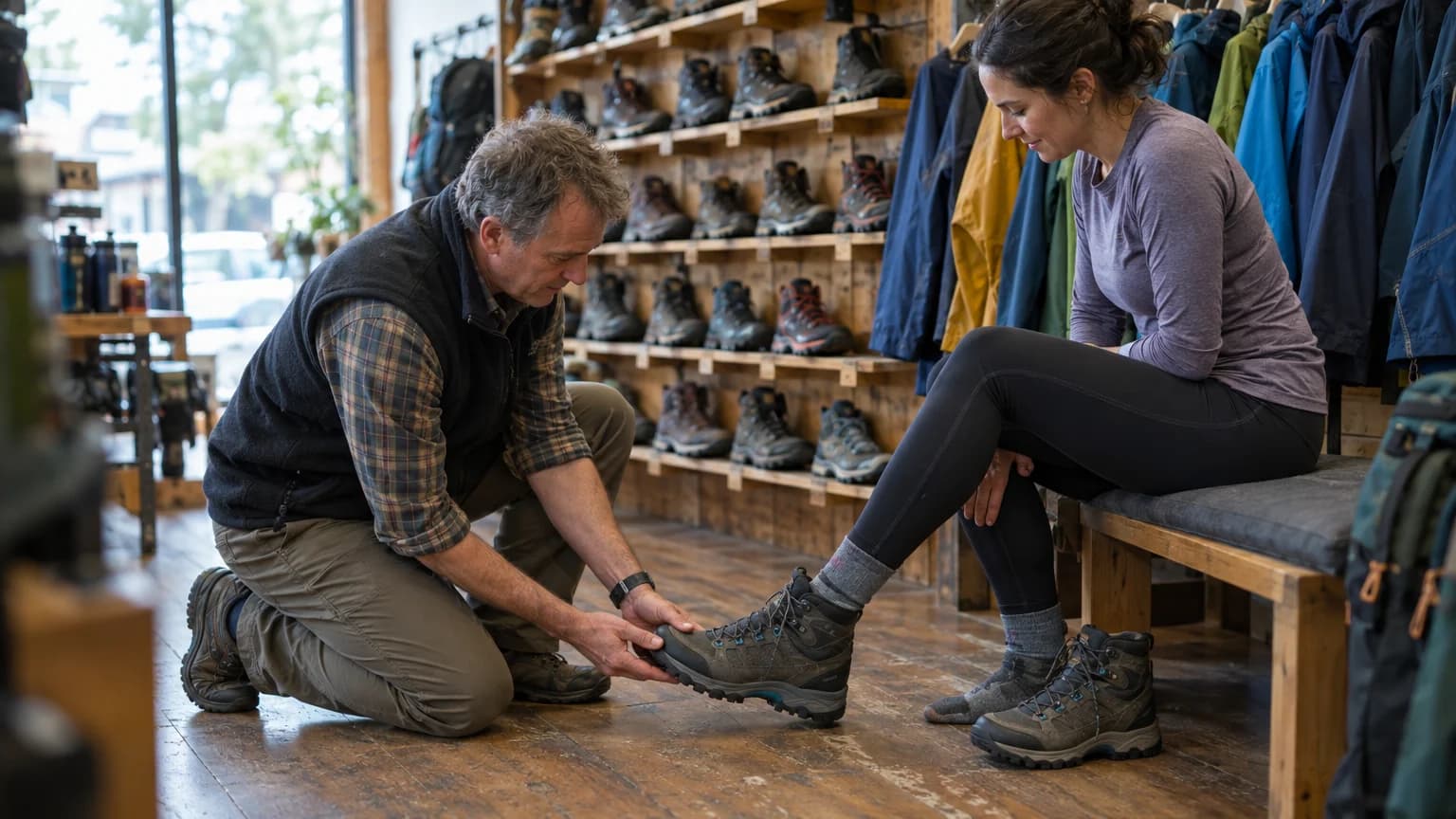
An ecommerce chatbot handles sizes well by asking before it guesses, and by only offering sizes that are really on the shelf. Matey's outdoor store chatbot does three things here:
- Asks mens or womens first. When most of what the customer wants comes in both and they haven't said, it asks, with two buttons.
- Shows real pairs only. Each product in the chat lists the sizes left in each colour, so nobody falls for a jacket that only exists in XXS.
- Ranks broken size runs lower. Gear with under half its sizes left, like the end of a discontinued shoe, isn't pushed to everyone. It's only recommended to someone who named it or wears one of the sizes left.
A great shoe with two sizes left is only a great shoe for two sizes of feet. A good staff member wouldn't push it on everyone who walks in, so the chatbot doesn't either.
Can a chatbot add products to the cart on an online store?
Yes. A chatbot can add products to the cart on an online store, and Matey's outdoor store build does it on every product it shows. The customer picks a size and colour from the ones in stock, taps Add to cart, and the chatbot sends the same request the store's own product page sends. The item lands in their real cart, and the cart icon in the store's header updates.
Every add the cart confirms is counted, with its price, so the owner can see which chats led to a sale in the making.
Can a chatbot check gear hire availability?
Yes. A chatbot can check gear hire availability when it's connected to the store's hire booking system, which is how Matey's outdoor store chatbot answers "can I hire a tent this weekend?" It checks what's free on those dates live, in about a second, and gives the daily rate. Every night it also reads what the store hires out and what it costs.
Booking itself still happens on the store's hire page. The chatbot gets the customer to that page knowing the gear is free.
What happens when an ecommerce chatbot can't help?
When an ecommerce chatbot can't help, it should send the customer to a person straight away, with everything they need to get a quick answer. Matey's outdoor store chatbot gives the team's phone number and email and says what to include, like the order number or the product they're asking about.
Anything the store's own pages and catalogue don't answer, like an order that hasn't turned up, goes to the team. The chatbot doesn't pretend to handle those. It's there to answer the hundreds of everyday questions so the team has time for the ones that need them.
Who is responsible when an ecommerce chatbot gets it wrong in Australia?
The store is responsible when its ecommerce chatbot gets something wrong. In Australia the ACCC has made it clear that a business can't sidestep the Australian Consumer Law by blaming an algorithm, as Inside Retail reported. The ban on misleading or deceptive conduct is in Schedule 2 of the Competition and Consumer Act 2010.
The best-known test case is Canadian. Air Canada's website chatbot told a grieving customer he could claim a bereavement fare after flying. He couldn't, under the airline's real policy. Air Canada argued the chatbot was responsible for its own words, and the tribunal disagreed: Air Canada had to pay him a total of C$812 (Moffatt v. Air Canada, BC Civil Resolution Tribunal, 2024).
That's why the outdoor store build checks prices and stock live, quotes store policies from the store's own pages, and sends anything it isn't sure of to the team. A chatbot that guesses at a refund rule is a liability, however friendly it sounds.
How do you test a store chatbot before you buy it?
Run the Matey counter test. Ask any chatbot the six things a customer would ask at your counter, and see if it answers like your best staff member would:
- The trip. "Going to Tassie in May, what do I need?" Does it ask the right questions, or dump a list?
- The budget. Give it a limit. Does the total stay under it?
- The size. Ask for a size that sold out this week. Does it know?
- Your own advice. Ask something your blog or buying guide already answers. Does it find your answer?
- The follow-up. Ask "something cheaper?" Does it remember what you were looking at?
- The person. Say you want to talk to someone. Does it make that easy?
A chatbot that fails number 3 will cost you sales and goodwill. One that fails number 4 is wasting years of your team's work.
Want to see a custom chatbot answer like this on a store? Try a matey on the homepage, or see how custom chatbot development works at Matey.
Questions people ask
What is a good chatbot example for an online store?
A good chatbot example for an online store answers from the store's own catalogue, stock, and policies, the way staff would at the counter. Matey's build for an Australian outdoor gear store knows about 7,300 products with live sizes and stock, the store's buying guides and staff gear lists, and the hire calendar, and it adds gear straight to the customer's cart.
What can an ecommerce chatbot do for an outdoor gear store?
An ecommerce chatbot for an outdoor gear store can recommend gear for a specific trip and budget, check which sizes and colours are in stock today, point customers to the store's own reviews and buying guides, check hire gear for their dates, add products to the cart, and pass anything else to the team with their phone number and email.
How does an ecommerce chatbot keep stock and sizes up to date?
A good ecommerce chatbot keeps stock and sizes up to date two ways: a full refresh of the catalogue every night, and a live check with the store's own site before every reply. In Matey's outdoor store build the live check takes about two seconds, so a size that sold out at lunch isn't offered in the afternoon.
Can a chatbot add products to the cart on an online store?
Yes. A chatbot can add products to the cart on an online store by sending the same request the store's own product page sends. In Matey's outdoor store build each product in the chat shows only the sizes and colours in stock, and Add to cart puts it in the customer's real cart, with the cart icon updating on the page.
Who is responsible when an ecommerce chatbot gets something wrong in Australia?
The business is. Under the Australian Consumer Law, what a store's chatbot tells a customer is treated like what its staff say, so a wrong price, stock level, or refund promise is the store's problem. That's why a good ecommerce chatbot checks prices and stock live and never guesses at policy.